Sunday, July 22, 2007

Hate crime legislation is not really about hate, but politics....
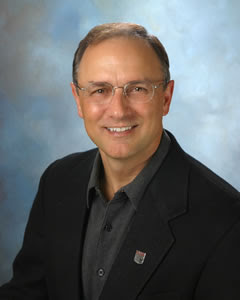
Stand to ReasonGreg Koukl's conclusion in Why Hate Shouldn't Be a Crime:
... Hate crime legislation is not the answer. It turns the government into thought police, and turns the law into a club to enforce political correctness. Those felled by its blow will be Christians and others like them.

Instead, existing laws should be enforced to give equal protection to all classes of people, punishing the crime and not the frame of mind.

For Believers, though, there is a frame of mind that needs attention.Made in His Image

Christians have an impulse to distance themselves from people like Matthew Shepard. Though his assault was lamentable, some have reasoned, he was, after all, a homosexual—evil and an abomination to God. Sporting signs with slogans like "Aids Cures Fags," they go public with their crusade by disrupting graveside ceremonies. This makes me want to weep.

There is no question in my mind that homosexuality is an egregious evil. Christians need to be reminded, however, that no matter how far we try to distance ourselves, we are more similar to Matthew Shepard than we are different from him.

Why Hate Shouldn't Be a CrimeThere are at least two things each of us share with Matthew, maybe three. First, like us, Matthew Shepard is a human being made in the image of God. His value transcends whatever evil he may have been guilty of. This makes the brutal crime against him unconscionable.

Second, Matthew Shepard is fallen, as we are. We stand beside him in the dock, guilty of our own crimes against our Creator. Paul asks, "Are we better than they? Not at all, for we have already charged that both Jews and Greeks are all under sin."

Finally, for the homosexual that turns to Christ for forgiveness, we share the same Savior. Christ's blood was shed for us equally: "For the wages of sin is death, but the free gift of God is eternal life in Christ Jesus our Lord."

For these reasons all Christians should be grieved and angered at the injustice done against homosexuals, just as they should the any victim of a crime. They should condemn without qualification the brutalizing of Matthew Shepard and others, a human being who is, in all the important ways, just like us.
Check out all of Greg's columns at Townhall here.

Greg is brilliant and is the founder of Stand to Reason. Check it out!

Labels: , , , ,

Monday, April 30, 2007

'The effective and mass communication of the gospel depends upon the freedom to proclaim it'...

Political Passivity—Vice or Christian Virtue?Greg Koukl on whether political passivity is a vice or a virtue:
...
The “Separation” of Church and State

The current understanding of separation of church and state—the view that the state is thoroughly secular and not influenced by religious values, especially Christian ones—was completely foreign to the first 150 years of American political thought. Clearly the Founding Fathers did not try to excise every vestige of Christian religion, Christian thought, and Christian values from every facet of public life. They were friendly to Christianity and encouraged its public practice and expression.

It wasn’t until 1947 that the United States Supreme Court first used the concept of “separation” to isolate government from religion. In Everson v. Board of Education, the court lifted a phrase from a letter Thomas Jefferson wrote to a Baptist church in Danbury, Connecticut. The Court ruled, “Neither a state nor the Federal Government can set up a church. Neither can pass laws which aid one religion, aid all religions, or prefer one religion over another....In the words of Jefferson, the clause against establishment of religion by law was intended to erect ‘a wall of separation between church and state.’”

...

Calling a Vice a Virtue

Followers of Christ should not be suppressed from without by a notion of separation foreign to the Constitution. Neither should they be silenced from within by misguided piety.

The Church can never replace the work of the cross with civic works of righteousness. This is beyond dispute as far as I’m concerned. The goal of Christian political activity, though, is not to make a nation acceptable to God. It’s to insure a just society.

Christian author Philip Yancey writes, “We have no mandate to ‘Christianize’ the United States—an impossible goal in any case. Yet Christians can work simultaneously toward a different goal, the ‘moralization’ of society. We can help tether the values and even the laws of society to some basis in transcendence.”

The myth of political passivity unwittingly makes a Christian virtue out of the vice of negligence. When we ignore our obligation to morally instruct the nation merely because someone labels it “politics,” then it won’t be long before the country teems with injustice as every man simply does “what is right in his own eyes.”
Check out his apologetics site called Stand to Reason.

Labels: , ,

Wednesday, November 22, 2006

Misunderstanding: 'Our battle is not against terrorism per se, but against any religion that claims to be true.'...

Stand To ReasonGreg Koukl discusses Christianity's Real Record:
It's easy to characterize religion as a blood - thirsty enterprise. History seems to be strewn with the wreckage of witch hunts, crusades, and religious jihad. If God does exist, a caller to my radio show offered, He ought to be tried for crimes against humanity.

The recent terrorist attacks have added a new twist: Our battle is not against terrorism per se, but against any religion that claims to be true. Thomas Friedman writing in the New York Times called it "religious totalitarianism."

Friedman’s solution: pluralism, the idea that "God speaks multiple languages." No one faith is exclusively true. Instead, all faiths are legitimate paths to God and anyone who claims otherwise is the enemy. Friedman’s call to arms, however, is misguided for three reasons. ...
There's too much good stuff to copy and paste here, but read the whole article at Townhall.com.

I'm glad to see Greg publishing at Townhall.com. You can find more information about him and his apologetics ministry at Stand To Reason.

Also, here are some Thanksgiving articles worth a look.

Previous posts on Greg Koukl:
Paul's letter to the Romans contains the Bible's clearest condemnation of same-sex relations.
Greg Koukl from Stand to Reason...interviewed by the BBC on the topic of abortion:
Gregory Koukl: The new definition of pluralism is not only indefensible, but it also discourages critical thinking about the real issues.
Sixty Second Theodicy...an attempt to deal with the problem of evil

Labels: , , , , ,

Thursday, June 22, 2006

Paul's letter to the Romans contains the Bible's clearest condemnation of same-sex relations. Recent scholarship finds the opposite. Who is right?

Speakers at STRPaul, Romans and Homosexuality...

by Greg Koukl:
... Paul was not unclear about what he meant by "natural." Homosexuals do not abandon natural desires; they abandon natural functions: "For this reason God gave them over to degrading passions; for their women exchanged the natural function for that which is unnatural, and in the same way also the men abandoned the natural function of the woman and burned in their desire toward one another..." (1:26-27) ...

... Natural desires go with natural functions. The passion that exchanges the natural function of sex between a man and a woman for the unnatural function of sex between a man and a man is what Paul calls a degrading passion.


Homosexual desire is unnatural
because it causes a man to abandon
the natural sexual compliment
God has ordained for him: a woman.


Jesus clarified the natural, normal relationship: "Have you not read that He who created them from the beginning made them male and female and said 'For this cause a man shall leave his father and mother and shall cleave to his wife and the two shall become one flesh [sexual intercourse].'?" (Matthew 19:4-5)

Homosexual desire is unnatural because it causes a man to abandon the natural sexual compliment God has ordained for him: a woman. That was Paul's view. If it was Paul's view recorded in the inspired text, then it is God's view. And if it is God's view, it should be ours if we call ourselves Christian.
Read the whole article... here.

Previous posts on Greg Koukl... here.

Apologetics at Stand to Reason.

Related:
Feminist Absolutism Infultrating Religions with Moral Relativism...
The homosexualization continues as emotion, love & tolerance are used against morality, standards & truth...

-Home-

Labels: , , , , ,

Thursday, May 18, 2006

Greg Koukl from Stand to Reason...interviewed by the BBC on the topic of abortion:

Listen to the interview by clicking hereOn The Interview this week Carrie Gracie meets
anti-abortionist Greg Koukl: (Listen here)
Abortion is the most emotive political issue in the United States at the moment and Greg is at the forefront of the struggle.

Through a Christian organisation he has set up, he trains people in the arguments against abortion and uses videos and photos to further his cause.

And abortion has had an impact on Greg's own life -- his wife had two abortions before they met and the couple have now adopted a baby girl from a mother who had considered abortion.
-Home-

Labels: , , ,

Thursday, May 04, 2006

Gregory Koukl: The new definition of pluralism is not only indefensible, but it also discourages critical thinking about the real issues.

Religious Pluralism
Some of you remember the caller from yesterday, Lee, who fell into the very same error right before our ears, not eyes. Lee, a Jewish man, was reprimanding me in a very terse way for promoting the Christian idea that Christianity was true and all other religions were false. What was wrong with that? This view spreads hate, he said.

He said, "We shouldn't criticize other people's religions." I said, "Then why are you criticizing mine?" He said, "It's wrong to say other religions are wrong." I said, "Then why are you saying my religion is wrong?" He said, "You're encouraging hate by saying only your view is right and others are mistaken." I said, "Then why are you spreading hate by publicly reprimanding me saying that only your view is right and mine is mistaken?"

Do you see how these arguments are self-defeating? And how this second version of tolerance is just silly? In order to tolerate somebody and be loving you can't assert your point of view as being correct. That's what they are saying. It is hateful. It is spiteful. It is like the guy yesterday who defined homophobia for me as someone who thinks that homosexuality is immoral. That's not a definition, that's just a name. I don't agree with your view, so you call me a name. A homophobe. Now, is that loving? Of course not. You see, these people can't play by their own pluralistic rules.

This is where the bottom falls out of this new definition of pluralism. The only way one can defend it is by violating their own principles of pluralism, which goes to show that this view just doesn't work. People rant and rave about being judgmental--all the time delivering their own judgments. And boy, I wish we could catch this: because they spend their time abrading people for thinking critically about the issues instead of asking the critical question themselves: Which religious view is more worthy of belief? They discourage proper critical thinking about these issues.

Isn't it unusual that this view encourages people never to assess the truth value of their religious claims. It's saying, don't think about those things, don't criticize, don't say somebody is wrong. If you buy that, then you can't criticize even the assessment of your own spiritual claims. Yet at the same time these are the folks who fault Christians who they think are blindly following the Bible. Religious truth claims must be challenged if we're to have any confidence whatsoever that they're true. If the truth claims of Christianity can be challenged--as they constantly are by these same religious pluralism devotees--why can't the truth claims of other religions also be challenged? It seems to me that what's good for the goose is good for the gander.

Mr. Tabash can only say that any individual who says that others are out of step with God's will--Pat Robertson, Jerry Falwell, for example--are intolerant and wrong because they claim to know what God's will actually is. But according to Edward Tabash, because Robertson, Falwell, and Buchanan think they know what God's will is, then they don't. But Tabash thinks he knows what God's will is, apparently, because these people are out of step with it. So then he must be out of step with God by his own rules.

Let's get rid of all this silly talk. Let's get down to the more vital questions. What is God's will, after all? How can we know it? How can we be confident of our knowledge? Let's think about those questions instead of throwing stupid arguments at everybody to get people to stop doing the critical thinking on the critical issues.
Amen.

It's not about always being right...on the scale of right and wrong, but striving to do what is morally right. There is a standard. It was set by Christ. It is unattainable by man, but a standard nonetheless.

-Home-

Labels: , , ,

Saturday, March 18, 2006

Sixty Second Theodicy...an attempt to deal with the problem of evil

Greg Koukl Radio...from the radio show "Stand to Reason," with Gregory Koukl.
How could a good God and a powerful God allow evil in the world?

My response is that I actually think that most people know the answer to that but they haven't really put it together for themselves. I want to ask four very quick questions that will bring it all into perspective.

First point: "Would you like to see laws prohibiting a person from choosing an abortion?" Keep in mind that I am presuming that I'm speaking to a non-Christian who is fairly liberal and this is the last thing they want. If they happen to be pro-life, I could change the question to "Would you like to see laws passed prohibiting premarital sex?" Or "prohibiting homosexual behavior?" Now I suspect that when I ask them if they want to have laws passed on any of those things, they would say "no". My question, "Why?" And their answer is going to be, "Because I think people ought to be allowed to choose." Now there's the key. If you ask a question that beckons the response that people ought to be allowed to choose between moral alternatives, that's the whole key.


I am presuming that
I'm speaking to a non-Christian
who is fairly liberal


Second point: "So, it's a good thing that you have freedom to make moral choices, is that right?" "Yes, of course."

Third point: "Would it be fair to say that it's part of the nature of moral freedom to be possible to choose either good or evil? In other words, how can you say you are morally free if you can only choose good? You say it's a good thing to have moral choices and that entails that one can choose either good or evil, correct?" "Yes."


how can you say
you are morally free
if you can only
choose good?


Last point: "Can raw power make it possible to have genuine moral freedom, but no possibility of doing evil?" The answer there is "No." Having genuine moral freedom entails the notion that you might choose evil, as we just said. And being strong can't change that. You can have all the power in the entire universe and you can't create a being who has moral freedom and at the same time has only one thing he can choose: good things, not bad things. Moral freedom requires that a person be capable of choosing evil and having moral freedom is a good thing.

That was the fourth question and here's how it comes together. Moral freedom requires that we can freely choose either good or evil; therefore, the possibility of choosing evil is a good thing, because moral freedom is a good thing. The fact that evil is possible is a good thing. Do you see that? Evil isn't good; but the fact that it's possible is a good thing because it means that you have genuine moral freedom.


Evil isn't good;
but the fact that it's possible
is a good thing


Let's get back to our original question. A good God would want to remove the possibility of evil. False. Based on our little discussion we just had, a really good God would make evil possible. He wouldn't make evil impossible. Because a really good God would allow men the moral freedom which is a good thing. Moral freedom requires at least the possibility of doing evil. So, when you talk about the goodness of God, the goodness of God doesn't argue against the possibility of evil. That would be a bad God that made evil impossible because that would mean that we would not have something good: moral freedom. A good God would give us moral freedom which means that evil is possible.


A good God would give us
moral freedom which means
that evil is possible


What about the second point? If He was powerful enough, He would get rid of evil. But how does having more power allow God to have a world of true moral choices where the only choice is to do good? Do you see that is contradictory? A world in which human beings have true moral choices means that they have true moral choices. Not just the choice to do good, but the choice to do good and evil. And no matter how strong God is, He cannot create a morally free creature for whom it is impossible to do evil. That is a contradiction of terms. So, in answering our question about the good God and the powerful God allowing evil, His goodness doesn't work against the possibility of evil, His goodness demands the possibility of evil as you yourself just essentially admitted. If I told you that I was going to pass laws that would force you to always do good, you would think that's a bad thing. You think moral freedom is good. God thinks so, too. He agrees with you. You agree with Him, but that entails the possibility of evil. It can't be otherwise, no matter how powerful God is. Because power has nothing to do with the equation. Pumping more power into it doesn't change it one bit.

That, though I took longer to do the explanation, only takes sixty seconds. That is the sixty second theodicy.

What I want them to acknowledge, to affirm, is that moral freedom is an objectively good thing. So what I'm going to try to do in my initial question is choose something that is kind of a hot button with them, something they will immediately disagree with in terms of moral force because it is an inappropriate restriction of moral freedom. Regardless of what you might think about abortion, their view might be, "It is up to me, I should be allowed to make the choice." Or regardless of what one happens to think about premarital sex, it is up to the individual to make the choice. Therefore affirming the objective goodness of moral free agency is what I am looking for them to do. The illustration is really irrelevant. I've just got to get a first question that really hits the mark right off the bat. I could ask, "do you think that the government should always force you to do what the government thinks is right in every single thing?" That probably would be the safest way to put it. "Do you think it is good that there is no possibility of moral choice?" is another way of asking the question. They are going to say, "No it is not good." Because being able to choose between good and evil is a moral good in itself. If you took away that choice, you'd being doing something bad.


being able to choose between good and evil
is a moral good in itself.
If you took away that choice,
you'd being doing something bad.


The reason this is such an important step is because they are basically asking God to take away the possibility of moral evil and they are claiming that would be a good thing and not a bad thing on the one hand. But, on the other hand, when you really get down to the nitty gritty of life -- the way they really believe life ought to be lived and that freedom ought to be allowed -- they believe just the opposite of what they are claiming. They don't want to live in a world where God makes their doing evil impossible. What they really want is to live in a world where they can do whatever they want, but nobody else can do bad towards them. They probably already know the answer to this, but they just haven't worked it out this way. So when they ask "Why doesn't a good God make evil impossible?", they have just agreed that if someone were to do that, it would not be a good thing, it would be a bad thing.


They don't want to live in a world
where God makes their doing evil impossible.
What they really want is to live in a world
where they can do whatever they want


If they reply that there is no good or evil, that it is all relative, then their objection vanishes. You see, their objection depends for its force on the fact that objective evil exists, not merely subjective evil. If evil is subjective, that means it is merely a way of us assessing external things, but the assessment is subjective and internal to me. It is in here, it is not out there. The only way you can construct a problem of evil for the existence of God is if evil is out there objectively. If it is just subjective and evil is just a matter of tastes, that's like saying, I can't believe God exists. Why not? Because of brussels sprouts. Why would brussels sprouts cause you not to believe in God? Because I hate those things, they are disgusting. And my response is, I happen to agree with you but there are a lot of people who like them. Why do you think God can't exist just because there are things that don't appeal to your tastes? You see. This becomes a non-issue at that point. That is why I believe that only the theists can even raise the question and be intelligible.
STR poscasts here

STR Blog here

STR Radio here

Home

Labels: , , , ,